Home & Kitchen · Sponsored
Baked-On Oven Film Is a Different Job Than Wiping a Counter — and One Photo Is Not Every Kitchen
This is sponsored advertorial content. Results vary.
Most kitchen cleaning is quick work. A counter gets a spray and a towel, the stovetop gets a sponge, and dinner moves on. The inside of the oven door is a different story. The brown film on that glass has been heated, cooled, and heated again, sometimes for months, until it behaves less like a spill and more like a coating.
That is why the same bottle that handles a counter can seem to do nothing on oven glass. A wipe moves loose grime around. Baked-on film usually needs time to soften first — a soak, a wait, and then some elbow work. Racks tell the same story: even after a good scrub, many still look used, because they are.
This sponsored page looks at Dr. Clean, a cleaning product advertised by its seller for baked-on kitchen messes. Dusk Clay Journal is not the manufacturer, did not run a lab test, and does not sell the product here. If you want details, the button below opens the seller's page, where price, packs, and shipping are listed.
See if this offer is available
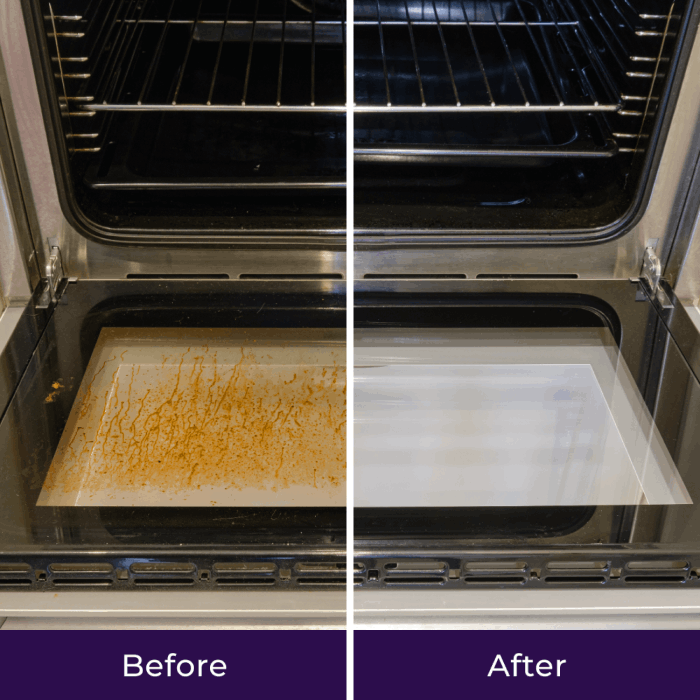
These photographs represent one example. Results are not typical and vary by soil, surface, time, and how the product is used. This is not a laboratory test and not a promise that every stain will lift.
What the seller is advertising
According to the seller's materials, Dr. Clean is meant for greasy, baked-on kitchen soil — oven glass, oven interiors, and similar spots. The pitch is simple: give the film time to loosen, then wipe or scrape it away with less effort than scrubbing dry.
That may help some households. It is also worth being plain about limits. Heavy carbon buildup, enamel that is already etched, and residue that has been baking for years may need a second pass, a plastic or razor scraper where the oven maker allows it, or a different product altogether.
How to approach a baked-on mess, carefully
Whatever cleaner you use, the order of operations matters more than the brand. A few cautions worth keeping in mind:
- Read the label first. Follow the seller's directions for dilution, dwell time, and rinsing. The label, not an ad, is the instruction sheet.
- Start with a cool oven. Let the oven cool fully before cleaning. Remove racks and loose crumbs first.
- Ventilate. Open a window or run the range hood while you work, and wear gloves if the label calls for them.
- Stay on listed surfaces. Do not use the product on materials the seller does not list. Test a small, hidden spot if you are unsure — self-cleaning oven liners, aluminum, and some coatings can react differently.
- Do not mix cleaners. Rinse away one product before trying another. Combining cleaners can release fumes.
- Expect more than one pass. Thick film often needs a second application, more waiting time, or a scraper. That is normal for baked-on soil.
- Store it safely. Keep cleaning products out of reach of children and pets, in the original container.
Price and stock are on the next page.
A few campaign-style notes
Illustrative campaign-style notes, not verified reviews collected by Dusk Clay Journal.
- “The door glass took two rounds and a scraper in the corners. Better than where it started, not showroom.”— Illustrative note
- “Racks still look like racks. The glass was the part I cared about, and that loosened with a longer wait.”— Illustrative note
- “Read the label twice and opened the window. The smell was noticeable, so ventilation matters.”— Illustrative note
Questions readers ask
That is not claimed here. The product is advertised for baked-on kitchen messes such as oven glass. Some messes need a second pass, a scraper, or a different product, and it should only be used on surfaces the seller lists.
No. It is one promotional example supplied for the campaign. Results are not typical and vary by soil, surface, time, and how the product is used. It is not a laboratory test.
No. This is paid advertorial content. Dusk Clay Journal may be compensated when readers click through or buy. It is not an independent product test and not a news report.
On the seller's cart. Price, pack sizes, shipping, availability in your area, and any money-back policy are set by the seller and can change. This page does not sell anything.
The short version
Baked-on oven film is slow work, and no single photo tells you how your own oven will turn out. If you are curious about Dr. Clean, read the seller's label and terms, check which surfaces are listed, and decide from there. Individual results vary.
Price and stock are on the next page.